




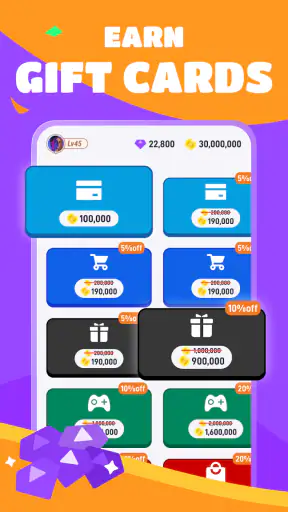
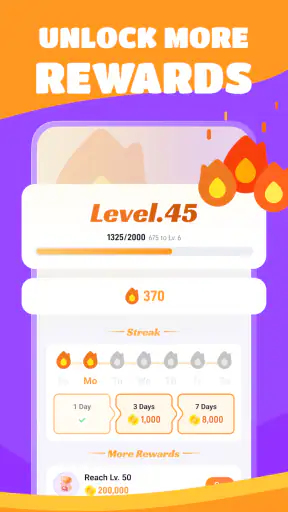



I went into PlayWell: Play to Earn Money expecting a simple entertainment app with a reward angle, and that is exactly where its appeal begins. It gives casual players a reason to open a game when they might otherwise scroll past it, while keeping the basic idea easy to understand: play, build up progress, and work toward gift cards. The important question, though, is not whether that concept is attractive during the first few sessions. It is whether the app still feels worthwhile once the novelty of earning something has worn off.
My overall impression is positive but practical. This is a free entertainment app from PlayWell Team, rated 4.4 on average by around 505 thousand people, with more than 5 million installs. Those numbers suggest that the reward-based format has found a broad audience, but popularity does not automatically make it a good fit for every player. I would recommend trying it if you already enjoy short mobile games and like having a small extra incentive. I would not treat it as a dependable income source or as a replacement for a full game with deep progression.
What the first week feels like
The first week is where the app has its strongest pull. The promise is immediately understandable, and the low entry barrier helps: it is free, aimed at Teen users, and works on devices running Android 9 or later. There is no need to learn a complicated genre before deciding whether the experience suits you. You can approach it as a collection of quick distractions rather than a serious gaming commitment.
That simplicity matters because reward apps can become confusing when they bury the central action beneath menus, instructions, or complicated conditions. PlayWell’s basic appeal is easier to grasp. I can open it when I have a few spare minutes, choose something to play, and keep an eye on progress toward a gift card. The reward goal gives an otherwise ordinary waiting-room or commute session a little more purpose.
A realistic everyday use case is a short break between errands. Instead of starting a large game that demands concentration and a long session, I might use PlayWell while waiting for an appointment or winding down before dinner. In that situation, the app works best as a light activity with a possible payoff, not as the main event of the evening.
The first-week excitement also comes from visible progress. Even modest movement toward a reward can make familiar actions feel more satisfying. This is a psychological advantage over many ordinary casual games, where the only result is an in-game score or another unlocked item. Here, the external goal gives the session a clearer ending point.
Still, I would advise new users to set expectations early. The reward system should be viewed as a bonus attached to play, not as payment for time in the normal employment sense. If the only reason you install it is the hope of making meaningful money quickly, the experience may feel disappointing once the initial enthusiasm settles. It is better suited to someone who would play casual games anyway.
How to use the early excitement wisely
My first practical tip is to decide what kind of player you are before spending much time with it. If you enjoy trying small games and changing activities often, the format may stay fresh longer. If you prefer one polished game with a strong story, competitive ranking, or carefully designed long-term progression, the reward layer may not compensate for the lack of depth you expect from a dedicated title.
I also found it useful to treat the first week as a test of routine rather than a race. Notice whether you naturally return to the app when you have free time, or whether you open it only because the reward promise is still new. That distinction predicts long-term value better than the first enthusiastic session. A product that fits naturally into your habits has a better chance of surviving after the novelty fades.
Another sensible habit is to play in defined windows. A short session keeps the app in its proper role as entertainment and makes it easier to judge whether the reward feels worth the time. Without a limit, the small promise of progress can encourage repeated checking, even when you are no longer enjoying the activity itself.
What remains useful from month to month
After the first month, the central issue changes. The question is no longer whether the concept is clever; it is whether the app gives me enough variety and motivation to return without feeling that I am repeating the same bargain. PlayWell has lasting value for people who enjoy low-pressure mobile entertainment and appreciate a small external incentive. It has less lasting value for anyone who needs constant novelty, deep mastery, or a strong social community.
Compared with ordinary casual games, its advantage is the reward framing. A standard puzzle or arcade title may offer better polish or more satisfying mechanics, but PlayWell can make short sessions feel more purposeful. Compared with other reward-oriented apps, its advantage is the directness of the idea: the activity is playing rather than completing a long list of unrelated tasks. That makes it more appealing when you want entertainment first.
The trade-off is that a reward-focused experience can make you judge every session by efficiency. In a normal game, I can replay a level simply because it is fun. In PlayWell, I may start asking whether the same time would be better spent elsewhere. That mindset can reduce enjoyment if the games themselves do not remain engaging.
For month-to-month use, I would divide players into three groups. The first group consists of people who already play casual mobile games and are happy to collect a little extra value while doing so. They are the strongest match. The second group includes occasional players who want something to fill small gaps in the day. They may enjoy it, but only if they are comfortable with modest expectations. The third group is made up of users seeking reliable earnings, substantial rewards, or a serious gaming experience. I would point them toward a different type of app.
The current version is 6.13.1, which is useful to know when checking compatibility or deciding whether an older device can run it. For an app intended to become a recurring habit, keeping the application updated is part of the experience. I would not ignore update prompts indefinitely, especially if a reward app changes its interface or activity flow over time.
Where recurring value comes from
The strongest recurring use case is fragmented free time. PlayWell makes more sense for several small sessions than for one long gaming marathon. A few minutes while waiting, taking a break, or relaxing after routine chores is the environment where its lightweight entertainment model feels most natural.
A second use case is motivation for players who struggle to choose what to play. The reward objective can act as a simple filter: instead of browsing endlessly through unrelated games, I have a reason to start. That is a small benefit, but it can make the app more convenient than keeping several casual titles installed and deciding among them each time.
A third, less obvious benefit is that the reward goal can help someone evaluate their own gaming habits. If I notice that I continue playing only when progress is available, that tells me the app is functioning more as a task than as entertainment. If I return even when the reward is not the main thought in my mind, then the format has found a better balance for me.
However, recurring value depends heavily on personal tolerance for repetition. Players who need a clear sense of mastery may soon feel that the external reward is doing too much of the motivational work. In that case, a traditional game with richer progression is likely to remain installed longer.
The real maintenance burden
PlayWell is not demanding in the same way as a large console-style game, but it still asks for attention. The main maintenance burden is behavioral: remembering to return, choosing when to stop, and deciding whether the progress justifies another session. That may sound minor, yet reward apps can quietly turn spare-time entertainment into a routine that requires more monitoring than expected.
I recommend checking your own reason for opening it every few days. Am I having fun, or am I simply chasing the next small step? If the answer is consistently the second one, the app may be taking more attention than it deserves. A reward should support the experience, not force me to continue after the entertainment has ended.
There is also a practical need to keep track of the reward goal. I would pay attention to the progress shown inside the app and avoid assuming that every minute of play has equal value. Reward systems often feel less satisfying when users do not know what they are working toward, so having a clear personal stopping point is useful. Once I reach the amount of progress that feels worthwhile for a session, I can close the app instead of continuing automatically.
Another maintenance issue is device and audience suitability. Because the content rating is Teen, parents and younger users should consider whether the app is appropriate for the person using it. The rating does not make the app unsuitable by itself, but it is a reminder that this is not positioned as a children’s entertainment tool.
For Android users, the minimum operating system is Android 9. That makes the compatibility requirement fairly important for anyone using an older phone. A reward app is not worth planning a routine around if the device struggles to install or run it comfortably. I would check the operating system before investing time in setting up an account or changing my usual gaming habits.
Small habits that improve the experience
I would keep notifications and checking behavior under control where the device allows it. The goal is to use the app during time I have already chosen for entertainment, not to let the reward promise interrupt work, study, sleep, or conversations. This is one of the clearest differences between a healthy casual habit and an attention trap.
I would also avoid installing it on a device used by several family members without agreeing on who is playing and who is tracking progress. Reward-based apps work better when one person has a consistent routine. Shared use can make progress harder to interpret and can create confusion about whose activity produced it.
Finally, I would compare the time spent with the enjoyment received, not only with the eventual gift-card goal. That comparison is more honest. If a session feels like a chore, switching to a normal game, reading, or taking a walk may be the better choice even though those alternatives do not offer a reward.
Why fatigue appears over time
The biggest source of fatigue is repetition. The reward concept is fresh at first, but any activity can become mechanical when the external incentive is the only reason to continue. Once I understand the basic loop, I may stop feeling curious and start feeling that I am completing a routine.
A second source is the gap between perceived effort and perceived reward. Even when the app is enjoyable, users naturally evaluate whether the result feels proportionate to the time spent. If progress seems slow or unpredictable from a player’s perspective, enthusiasm can turn into impatience. I would not recommend continuing through that frustration simply because a reward is visible.
A third issue is comparison with dedicated alternatives. A carefully made free-to-play game may offer stronger controls, a more memorable art style, richer progression, or a more coherent challenge. A traditional entertainment app may provide videos, music, or social content with less active effort. PlayWell has to compete not only with other reward apps, but with everything else available during a spare five minutes.
That does not make it a poor product. It simply clarifies its place. It is most convincing when the act of playing is already appealing and the reward adds a little extra motivation. It is less convincing when the reward is expected to rescue games that are not interesting on their own.
I would also be cautious about turning the app into a daily obligation. A habit is valuable when it is easy to maintain and pleasant to resume. If missing a day creates guilt or makes the user feel behind, the entertainment has started to resemble a chore. For me, the healthiest approach is flexible use: open it when I genuinely want a short game, skip it when another activity is better, and judge the experience over several weeks rather than one unusually productive session.
Who should skip it
I would skip PlayWell if my main goal were dependable income. The app’s reward premise may be attractive, but casual play and reliable earnings are very different expectations. I would also skip it if I dislike reward loops, feel uncomfortable with apps that encourage repeated engagement, or prefer to spend my gaming time building skill in one substantial title.
It may not be the best choice for someone with very limited storage, an older Android device below the required operating system, or a strict preference for entertainment without any reward-related motivation. In those cases, a lightweight standalone game or another familiar entertainment service could be simpler.
On the other hand, I think it is worth trying for casual players who want an easy way to make idle moments more engaging. The price is free, so the decision does not require a purchase, but time remains the real cost. That is why I would give it a fair trial while keeping the option to remove it if the routine stops feeling enjoyable.
Does it earn a lasting place?
My long-term verdict is that PlayWell can earn a place on the phone, but only as a flexible side activity. Its best quality is the way it gives casual play a clearer purpose without demanding the commitment of a large game. Its weakest point is the same reward loop: once the novelty fades, the user has to decide whether the underlying entertainment is strong enough to stand on its own.
The app is a good match for people who enjoy short games, like working toward gift cards, and can keep reward chasing in perspective. It is especially practical for fragmented free time, where a quick session already fits naturally into the day. It is not the right choice for users looking for meaningful financial returns, deep gameplay, or a single long-term game world.
PlayWell Team has created a straightforward entertainment concept, and its 4.4 average from a large user base shows why the format appeals to many people. I would describe the app to a friend as a low-risk experiment rather than a must-have. Install it, test whether the games themselves hold your attention, and set a sensible limit on how much time you give the reward loop.
The deciding test is simple: after the first excitement passes, would you still want to play for a few minutes even if the reward were not on your mind? If the answer is yes, PlayWell may remain a useful little part of your routine. If the answer is no, a conventional game or another entertainment app will probably give you more lasting satisfaction.


